Still Warm From the Last Winner: Why Slot Machine Superstitions Are Draining Your Bankroll
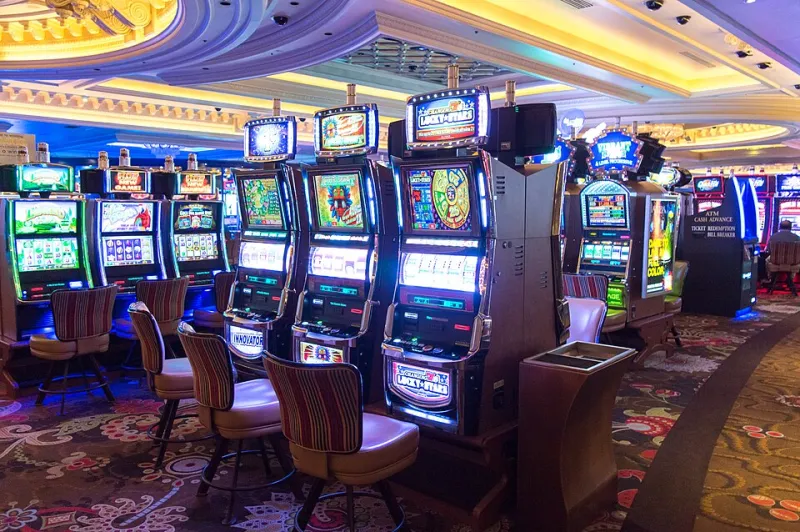
Photo: Tristan Surtel, CC BY-SA 4.0, via Wikimedia Commons
The Machine Doesn't Remember. But You Do.
Picture this: you're walking the floor and you pass a slot machine that just lit up like a Christmas tree. Someone hit big — maybe a few hundred bucks, maybe more. They cash out, grab their ticket, and walk away grinning. And right on cue, a little voice in your head whispers, that machine is hot right now.
It's one of the most common beliefs in the casino world, and it's also one of the most expensive. The idea that a machine that recently paid out is somehow primed for another win — or conversely, that a machine that hasn't paid in a while is 'due' — feels logical on the surface. But it's built on a fundamental misunderstanding of how these games actually work.
The truth? That machine has no memory. None. Zip. Each spin is a completely independent event, generated by a Random Number Generator (RNG) that doesn't keep score, doesn't track streaks, and absolutely does not care that someone just walked away with a jackpot two minutes ago.
What the RNG Actually Does
Modern slot machines — whether you're playing at a brick-and-mortar casino in Vegas or spinning reels on a platform like Magius Casino — run on RNG software that produces thousands of random outcomes per second. The moment you hit spin, the system locks in a result. That result has no relationship to the spin before it or the spin after it.
Think of it like flipping a coin. If you flip heads five times in a row, the sixth flip is still a 50/50 shot. The coin isn't 'due' for tails. It simply doesn't work that way. Slot machines operate on the same principle, just with far more complex probability tables and hundreds of possible symbol combinations.
The RTP (return to player) percentage you hear about — say, 96% — represents a statistical average calculated over millions of spins. It tells you nothing about what's going to happen in your next twenty pulls. That number is a long-run projection, not a session guarantee.
The Gambler's Fallacy Has a Long and Expensive History
What you're experiencing when you chase a 'hot' machine is a well-documented cognitive bias called the Gambler's Fallacy — the mistaken belief that past random events influence future ones. Psychologists have studied this pattern for decades, and it shows up everywhere from casino floors to stock trading to sports betting.
The most famous real-world example happened at a Monte Carlo roulette table back in 1913, when the ball landed on black 26 times in a row. Players bet enormous sums on red, convinced the streak had to end. It did, eventually — but not before many of them went broke waiting for an outcome that the wheel had no obligation to deliver on any particular spin.
Fast forward to today, and the same mental trap is playing out on slot floors across the country. The names and machines change. The psychology doesn't.
Casinos Aren't Exactly Discouraging This Behavior
Here's where it gets interesting — and a little uncomfortable. Casino floor design isn't random. The layout of machines, the placement of high-traffic areas, and the visibility of big winners are all deliberate choices made by people who understand human psychology extremely well.
When a machine hits a jackpot, the lights flash, the sound effects go wild, and everyone within thirty feet notices. That's not a coincidence. Casinos want you to see wins happening around you. It creates the illusion of a 'live' floor where payouts are flowing freely. It triggers social proof — if someone nearby just won, winning must be possible right now, right here.
Physically, high-visibility machines are often placed near entrances, walkways, and food courts — spots where foot traffic is constant and passersby can witness wins in real time. Some older casino theories even suggested placing looser machines in high-traffic areas to create visible excitement, though modern casino management is more sophisticated than a simple loose/tight floor split.
The point is: the environment is engineered to make you feel like opportunity is everywhere, and that the last winner left behind something you can still grab. You can't. But the feeling is very real.
The Slot Superstitions That Won't Die
Beyond chasing recent winners, the 'hot machine' myth has spawned a whole ecosystem of related beliefs that are equally unfounded:
- The 'due' machine: A slot that hasn't paid in a long time must be about to hit. (It isn't. See: RNG.)
- Temperature superstitions: Warm coins or tokens produce better results. (Machines are digital. This is folklore.)
- Time-of-day theories: Casinos loosen machines on weekends or at night to attract crowds. (RTPs are programmed into the software and don't fluctuate based on the calendar.)
- Seat loyalty: Staying at the same machine long enough eventually 'unlocks' a payout. (Each spin resets. There's no unlock.)
None of these hold up under scrutiny. But they persist because the human brain is wired to find patterns — even in pure randomness. It's not a character flaw. It's just how cognition works. The problem is that casinos are a place where that wiring actively works against you.
How to Play Slots Without the Myth Getting in Your Way
The good news is that awareness is a genuinely useful tool here. Once you understand that no machine is hot or cold, you free yourself from the decision-making trap of chasing other people's wins. Here's how to approach slots with a clearer head:
Pick machines based on RTP and volatility, not recent activity. High-RTP slots return more over time. Low-volatility slots pay smaller amounts more frequently. High-volatility slots pay bigger amounts less often. Choose based on your bankroll and session goals, not based on what the guy next to you just hit.
Set a hard session limit before you sit down. Decide how much you're willing to spend, and treat that number as the cost of entertainment — not as a starting investment you expect to recoup. If you hit your limit, walk. The machine will still be there.
Ignore the floor noise. Jackpot sounds and flashing lights are environmental cues designed to keep you engaged. Treat them as background noise, not as signals about where the action is.
Avoid chasing losses at the same machine. If a slot isn't performing for you in a session, moving to a different one isn't going to improve your odds — but it might reset your mindset, which has value.
Take breaks. Seriously. Stepping away from the floor for ten minutes does more for your decision-making than any betting system or machine-selection strategy ever will.
The Smartest Bet You Can Make
At Magius Casino, we believe the best players are informed players. Spinning bold doesn't mean spinning blindly — it means understanding the game you're playing well enough to enjoy it on your own terms. And the first step toward that is letting go of the idea that any machine owes you something because of what it did or didn't do for the last person.
The reels don't carry history. Your bankroll does. Play accordingly.