Skip the Saturday Scramble: Why Monday Night Is the Sharpest Time to Play
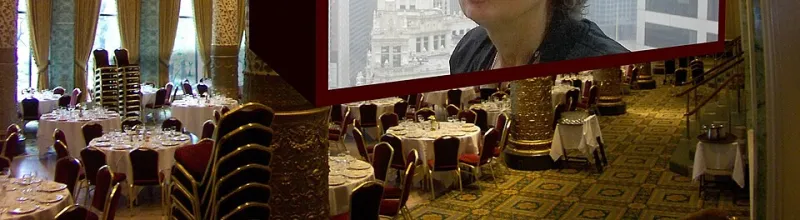
Photo: Onasill - Bill Badzo - 144 Million Views from Canada, CC BY-SA 2.0, via Wikimedia Commons
Let me say the unpopular thing first: Saturday night at the casino is a bad deal, and it has nothing to do with the odds.
The odds are the same on Tuesday. The math does not check the calendar. What changes is you. Saturday night you are tired from a week, wired from a crowd, dressed up, one drink past your usual limit, and standing at a table where the minimums got bumped because demand is high. You are making decisions at a different speed than you would at 8 p.m. on a Monday with a cup of coffee and nobody to impress.
That gap is real, it is measurable in your bankroll, and almost nobody talks about it.
The Saturday Tax Nobody Itemizes
Saturday does three things to a player at once.
First, it raises the floor. Casinos raise table minimums on weekend nights because the room is full. A $10 table becomes $25 and a $25 becomes $50, which means the same ninety minutes costs you two and a half times as much per hand for no additional entertainment value.
Second, it compresses your decision time. Crowded tables mean faster dealers, more hands per hour, and less space to think. Slot players are not immune either — a packed floor is a loud floor, and noise pushes people toward quicker, more repetitive button presses. More decisions per hour, at the same house edge, is a bigger expected loss. That is just arithmetic.
Third, it stacks temptation on top of fatigue. The sportsbook is showing a game, the bar is busy, your friends are still going, and the exit gets further away with every round. Most of the worst decisions I have ever heard described to me happened after 11 p.m. on a weekend, and almost none of them were about math.
What a Weeknight Actually Gives You
Calmer pacing is the headline, but the benefits compound.
- Lower minimums. Monday and Tuesday rooms are quieter, and quiet rooms price themselves accordingly.
- Space to actually think. Fewer players per table means you can watch a shoe or two before buying in, track your own results, and leave without navigating a crowd.
- Faster, more attentive service. Drink orders arrive, questions get answered, and staff have time to explain rules instead of reciting them.
- Network and processor breathing room. Deposits and payouts move faster midweek, when batch queues are not jammed.
- A natural stopping point. Monday night has a built-in wall called Tuesday morning. Saturday does not.
The 90-Minute Weeknight Blueprint
This is the part that matters. A calm room is only an advantage if you use it.
Set the clock before you sit down. Pick a start time and a hard stop, and set an actual alarm. Ninety minutes is the sweet spot — long enough to feel like a session, short enough that fatigue never gets a vote.
Cap the table count. One table, or two if you are a slot player hopping between machines. Table-hopping is the most common way a disciplined player turns a tidy profit into a slow leak.
Set your unit before you arrive. Decide what a single bet is worth to you as a percentage of your session bankroll — a common approach is one to two percent — and do not change it mid-session because you are up or down. Changing your unit is how a session becomes an experiment in feelings.
Write the stop-loss and the stop-win. Both, not just one. A stop-loss protects the rent. A stop-win protects the win, which is the money players most reliably give back.
Put a ceiling on drinks. If you drink at all, one before you sit and none during is the cleanest rule. Alcohol does not change the odds; it changes your patience, and patience is the whole game.
Do the five-minute postgame. After your alarm, before you close the laptop or leave the lot, write down time played, starting bankroll, ending bankroll, and one decision you would make differently. Two sentences. That log becomes the most useful document you own.
Picking the Right Table on a Tuesday
Weeknights reward selectivity. Walk past the first three tables.
Look for a table where the dealer is unhurried and the players are not screaming at every card. Look for a game with rules you actually know cold — a crowded room hides bad rules, a quiet one exposes them. Sit out a shoe. Watch how the table treats a new arrival. If the minimum feels like a stretch at 8 p.m., it will feel like a disaster at 10 p.m., so buy in at a level where a bad run is boring instead of catastrophic.
For slots, weeknights are the best time to actually read a paytable. The floor is quiet enough to think, and most players never bother. Knowing what a game's volatility and return look like before you spin is a free edge over everyone who did not.
The Trap: When 90 Minutes Becomes Three Hours
Every weeknight session that goes wrong goes wrong the same way. You hit your stop-win, you feel sharp, and you decide that sharpness is a reason to continue.
Build three exit rules and treat them as non-negotiable. Leave when the alarm fires, no exceptions and no finishing the shoe. Leave when you hit either number, stop-loss or stop-win. Leave when you notice yourself negotiating — the moment you think just one more, that is the moment you are no longer playing the same game you started.
Make It a Habit, Not a Binge
Weekly is plenty. Fifteen ninety-minute sessions is a far better education than three Saturday marathons, and the cost of tuition is dramatically lower. You will learn your own patterns faster in short, repeating sessions with a log than in long chaotic ones you barely remember.
Saturday will always be there, louder and more expensive. Monday night is where the thinking happens. Spin bold, play smart, and put the calendar on your side.