What Your Bets Say About You: Reading the Psychology Behind Every Wager

You walk up to the table, chips in hand, and you make a bet. Simple enough, right? But that single decision — how much you wagered, how quickly you placed it, whether you hesitated — carries a surprising amount of information. Casino analysts, behavioral psychologists, and experienced players have long understood that the way someone bets is almost like a fingerprint. It's personal. It's revealing. And if you're not paying attention to your own patterns, you might be broadcasting a lot more than you realize.
At Magius Casino, we're all about playing smart. And playing smart starts with knowing yourself.
The Language Nobody Teaches You
Most players focus outward — on the cards, the wheel, the odds. That's understandable. But there's an entire conversation happening inward, one that shows up in your betting behavior whether you intend it to or not.
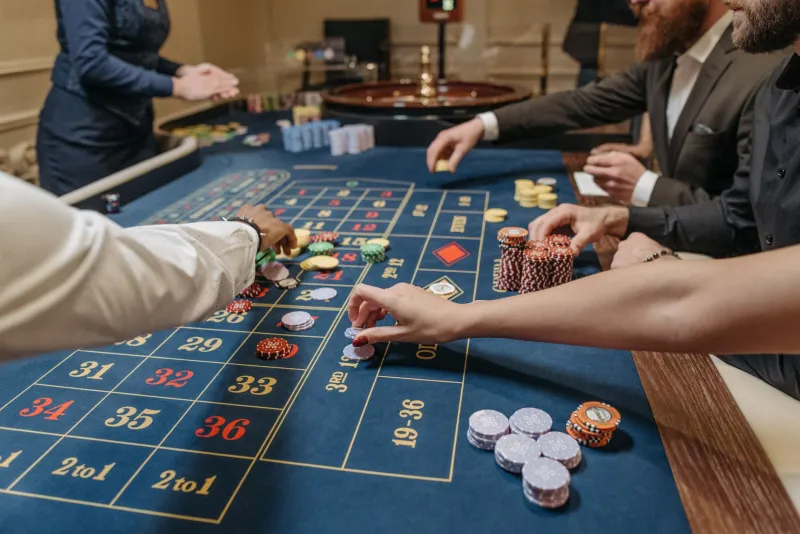
Take bet sizing, for instance. A player who consistently bets the same flat amount tends to be methodical, perhaps even a little risk-averse. They're playing a long game, prioritizing survival at the table over the thrill of a big swing. On the flip side, someone who dramatically increases their bets after a loss is likely chasing — trying to recover ground emotionally rather than making a calculated decision. That behavior has a name in behavioral economics: loss aversion. It's one of the most common cognitive traps in gambling, and it's incredibly hard to spot in yourself when you're in the middle of it.
Then there's the player who bets big right after a win. Sometimes that's confidence — a legitimate read of momentum. But often, it's something called the "house money effect," a psychological quirk where people treat winnings as less real than their original bankroll, which leads to looser, riskier decisions with money they've already earned.
Tempo and Timing Tell a Story
It's not just how much you bet, but how fast you bet it. Speed is one of the more underappreciated behavioral signals at the table.
Players who slow down between bets are often recalibrating — checking in with their strategy, reassessing the session. That's generally a healthy sign. It suggests a degree of intentionality. But players who speed up as a session progresses — placing bets faster, almost reflexively — may be entering what psychologists call "automaticity," where decision-making shifts from the deliberate, rational part of the brain to the more impulsive, emotional one.
If you've ever looked down at a table and thought, wait, when did I bet that much? — you've experienced this firsthand. The session took over. Your brain went on autopilot, and your bankroll paid for the ride.
This is especially relevant in online play, where the friction of physically stacking chips is removed. Digital interfaces make it easier to bet faster, which means the mental discipline required actually goes up, not down.
Risk Tolerance as a Mirror
Your comfort with risk at the casino rarely exists in a vacuum. Research in behavioral finance consistently shows that risk tolerance in financial and gambling contexts often reflects broader personality traits and even current emotional states.
Someone going through a stressful week at work might find themselves betting more aggressively — not because the odds changed, but because stress hormones like cortisol can reduce our sensitivity to potential losses. Conversely, players who are in a calm, positive headspace tend to make more conservative, measured decisions.
This is why many seasoned players treat their emotional state as part of their pre-game checklist. Before sitting down, they ask: Am I here to have fun and play smart, or am I here to escape something? The answer to that question matters enormously. Playing to escape — whether from boredom, stress, or a bad day — is one of the clearest predictors of reactive, emotion-driven betting.
Knowing this about yourself isn't a weakness. It's an advantage. Self-awareness is the foundation of every sound gambling strategy.
Superstition and Pattern Recognition Gone Wrong
Humans are wired to find patterns. It's one of our greatest cognitive strengths — and one of our most exploitable vulnerabilities at the casino.
When a player avoids a particular table because they "lost there last time," or switches slots after three non-wins because they believe the machine is "due," they're not reading the game — they're reading their own emotional narrative. Past outcomes in games of chance have zero predictive value for future results. The roulette wheel doesn't remember your last spin. The slot machine doesn't owe you anything.
Yet superstitious betting is remarkably common, even among otherwise analytical people. It tends to spike after significant losses, when the brain desperately wants to find a controllable variable in an uncontrollable environment. Recognizing this impulse — and consciously separating it from your actual strategy — is a skill that takes practice but pays real dividends.
Using Self-Awareness as a Strategy
So what do you actually do with all of this? The goal isn't to psychoanalyze yourself into paralysis. It's to build a feedback loop that keeps your play intentional.
A few practical habits that experienced players swear by:
Set a session intention before you start. Decide in advance what kind of play you're aiming for — conservative and steady, or aggressive with a defined ceiling. Writing it down (even mentally) creates a reference point you can return to if things go sideways.
Check in every 20-30 minutes. Briefly ask yourself: Am I still playing the way I planned? Has my bet sizing drifted? Am I speeding up? This kind of micro-audit can catch a slide before it becomes a spiral.
Name the emotion before acting on it. Feeling the urge to double your bet after a loss? Pause for five seconds and name what you're feeling. Frustrated? Anxious? Excited? Naming the emotion activates the rational brain and creates just enough distance to make a more deliberate choice.
Treat your betting pattern as data, not destiny. If you notice you always chase losses or always bet big when you're winning, that's useful information — not a character flaw, just a tendency to work with.
The Smartest Play Is Knowing Your Own Game
The casino floor — whether you're in Las Vegas, Atlantic City, or playing online at Magius Casino — is an environment specifically designed to be immersive and stimulating. That's part of the fun. But it also means the external noise can easily drown out the internal signal.
The players who consistently get the most out of their sessions aren't necessarily the ones with the best luck or the deepest pockets. They're the ones who've taken the time to understand how they think and feel under pressure — and who've built enough self-awareness to play their own game instead of reacting to everyone else's.
Your betting patterns are telling a story. The question is whether you're the author — or just along for the ride.